How to free a seized or rounded line nut on brake, fuel and turbo oil lines
- Author
- Selami Kumru
- First published
- First published:
- Last updated
- Last updated:
- Reading time
- 6 min read
- Category
- Steel pipes
A seized line nut on a brake, fuel or turbo oil line is freed by working in order, not by adding leverage: clean, soak with penetrating oil and wait, use a flare-nut wrench, nudge the nut tighter first, then work it back and forth, with heat only where it is safe. If the pipe turns with the nut, stop. A rounded nut means cutting the pipe, undoing the nut with a six-point socket and fitting a new pipe.
Short answer
- Wrench: an open-end wrench bears on two flats; a flare-nut wrench wraps five of the six.
- Order: clean, soak, wait; tighten a touch first, then work the nut back and forth. Heat comes last.
- If the pipe turns with the nut: stop. A twisted pipe does not go back on.
- Rounded nut: cut the pipe, undo the nut with a six-point socket, replace the pipe.
Why does a line nut seize?
A line nut should turn freely on its pipe: it presses the flared end onto its seat while the pipe stays still. Once rust has bonded the two, the nut cannot turn alone, and a wrench on the nut twists the pipe as well.
One car-forum thread opens with this: where a brake pipe screws into the flexible hose, the nut twists the hard line as it unscrews, “resulting in a damaged or snapped hard line”. On coated lines the twisting shows only when it is too late. The poster sees no rust in it; one reply still names what has to be broken: the “rust bond”.
A mechanic’s short video shows the same on a turbocharger: on a Volkswagen engine the oil feed pipe nut had seized into the union in the turbo, and the whole union turned and twisted the pipe.
Why does an open-end wrench round the nut off?
An open-end wrench holds a hexagon nut by two flats, so the load lands on the corners and they give way. The hand-tool maker Unior puts it this way:
“An open-end wrench pushes on two flats of a nut and lets the corners take the strain, while a flare nut wrench surrounds five of the six flats, so a soft fitting keeps its shape under real torque.”
Unior, tech tip, 11 June 2026
A flare-nut wrench (line wrench) is a six-point ring spanner with a slot in one side to pass the pipe. The nut is soft, too: the trade magazine MOTOR says these fittings are often brass and among the most commonly overtightened fasteners in a workshop.
The slot is the weak point. Unior’s advice: fit the wrench with the slot facing away from the pull, because loading the cut side springs it open on a stuck fitting.
Where should the nut not be heated?
A flame has no place on a fuel line, on a joint wet with brake fluid, on a pipe with its rubber hose attached, or beside wiring or a sensor. We found no vehicle maker’s instruction on this; the warnings come from a trade magazine and from forum accidents.
Look around the nut before you light the torch. In Commercial Vehicle Workshop, the induction-heater maker GYS calls an oxyacetylene flame imprecise, “so there is greater risk of damage to fuel pipes, wiring looms, rubber components, sensors”. On the forum, one contributor set a rear brake line alight and put it out with wet towels; another warns that heating the pipe with the hose attached bursts the rubber. On fuel lines most replies agree: no heat, cut the line and replace it.
The same thread has contributors who heat brake line fittings without worry; one has never needed his fire gear. Both views are personal experience.
What if the pipe has turned with the nut, or the nut has rounded off?
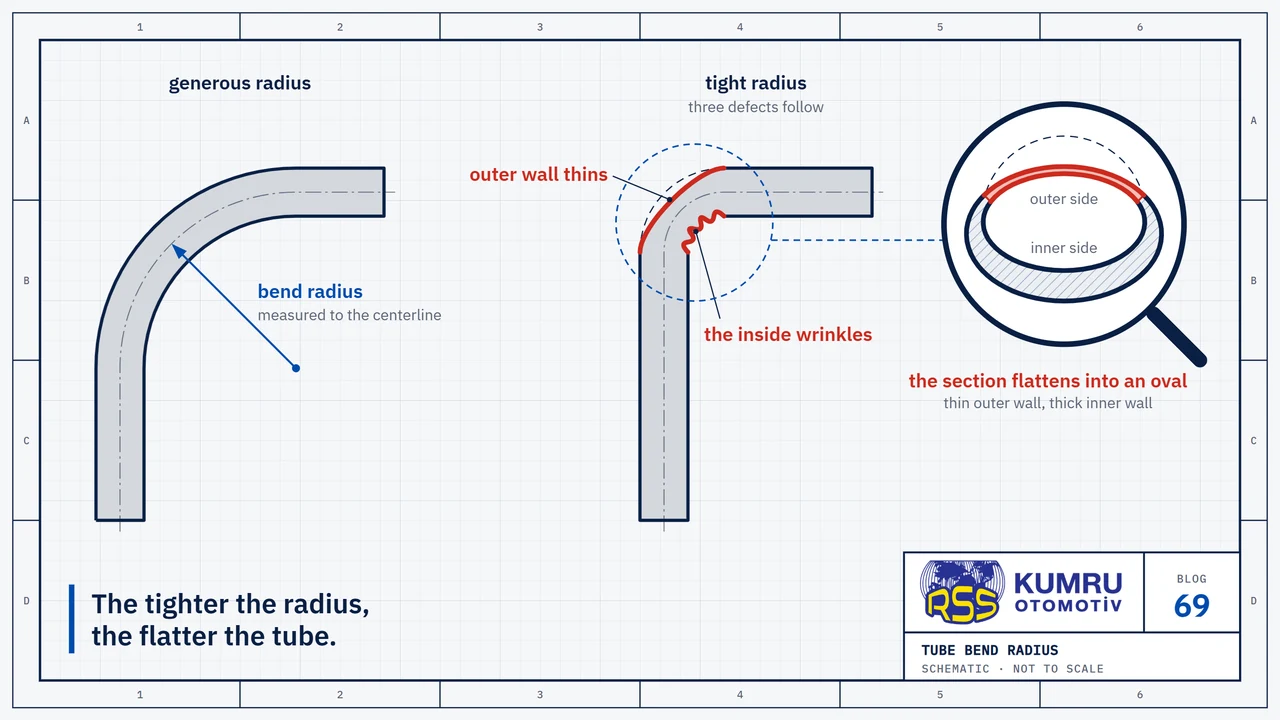
If the pipe starts to turn with the nut, stop; that is where the forum’s hard lines snapped. MOTOR warns that a kink in the wall of a hydraulic line can reduce flow or even leave residual pressure. Do not straighten a twisted pipe and refit it. No source says that in so many words; it is our conclusion from the warning about kinks.
When the nut has rounded off, or the pipe is coming out anyway, several forum contributors give the shortest route: “Cut the line and put a socket on the nut.” They recommend a six-point socket, and in Unior’s comparison only a closed head grips all six flats.
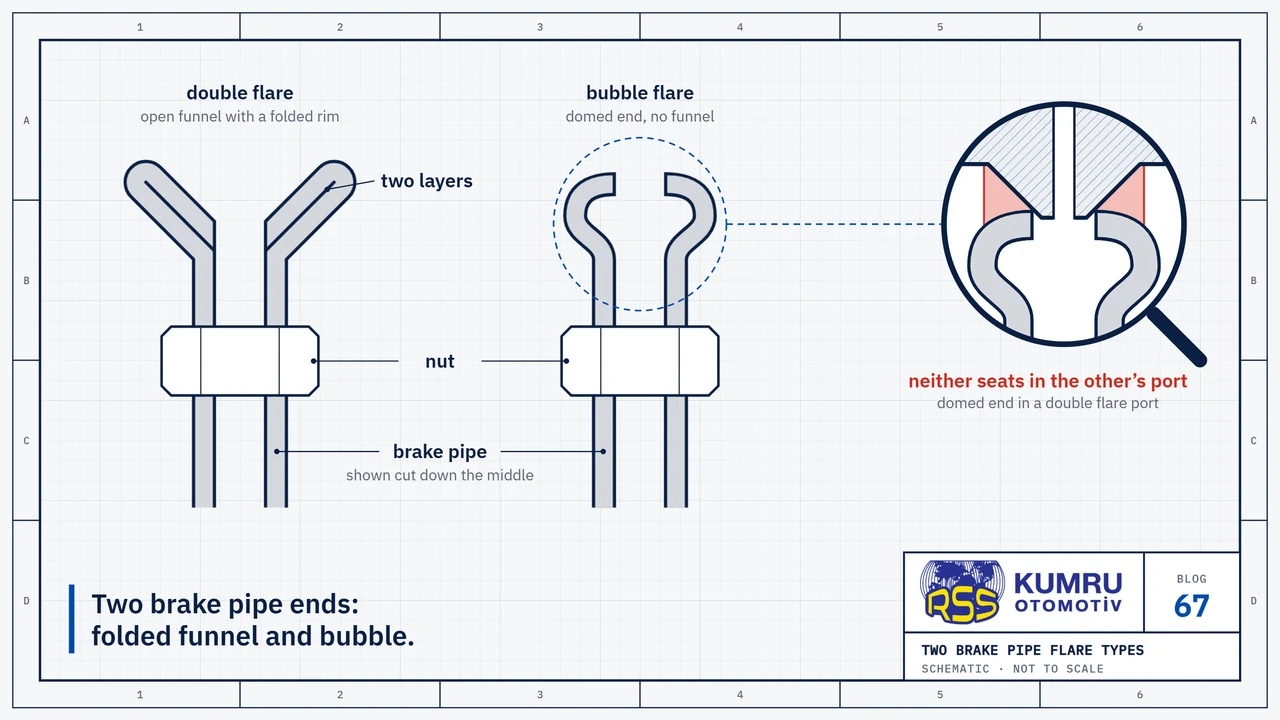
A cut pipe is replaced; one forum contributor re-flares the old pipe with a new nut instead. MOTOR’s limit applies either way: “Only flared fittings are approved for brake line use.” The same article calls compression fittings illegal on brake lines.
What changes on high-pressure fuel lines and turbo oil pipes?
On a high-pressure fuel line the nut is undone while a second wrench holds the fitting it screws onto; the manufacturer procedure we read has no heating step. For the rail feed lines of its DD15 and DD16 engines (two-filter fuel system), Detroit Diesel wants the engine stopped for at least 10 minutes first. The pump fitting is held with a 24 mm wrench while the lines come off; if it still loosens, it is re-torqued to 75 N·m. For refitting: “All bolts and fittings MUST be installed using hand tools.”
That procedure discards the removed lines, and a common-rail pipe is usually single-use anyway. What needs protecting is the fitting, not the pipe. The procedure does not say so; it is our reading of the back-up wrench requirement. A fuel line that had to be cut is replaced: a coupling in the middle is not a repair.
For turbo oil pipes our only example is the video above. The mechanic held the union with locking pliers, propped up a metal shovel to shield the wiring loom, heated the joint red hot and undid it. That is one mechanic on one car; we found no manufacturer instruction for it. If your pipe is held by a banjo bolt, its washers and torque are a separate subject.
In what order do you free a seized line nut?
A seized line nut is cleaned and soaked first, then moved with a flare-nut wrench, tighter before looser; heat and the cutter come last. This is workshop practice from two forum threads, not a manufacturer’s procedure.
- Look around the joint. Hose, wiring or fuel nearby?
- Clean it before the penetrating oil goes on.
- Soak it and wait. Overnight if you can, says the forum. Unior: “If the fitting still won’t move, reach for penetrating oil and patience, not more arm.”
- Mark a straight line along the pipe with a paint pen. It shows if the pipe turns.
- Seat the flare-nut wrench fully, slot trailing.
- Tighten a touch first, in one reply’s words “just enough to crack it free”.
- Work it back and forth. Another reply: “Tighten first, then loosen an 1/8 turn then tighten.”
- Heat, if the place allows it. The same reply: a very small torch tip, and “heat the nut, not the line”.
- Locking pliers come last. One contributor has better luck with them on really stuck fittings. If the pipe turns or the nut rounds off, cut the pipe.
- Put nothing on the threads when refitting. MOTOR: “The pressure seal in a brake line is always metal-to-metal. Therefore, thread sealant is neither required nor allowed.”
- Take the torque from the service data. MOTOR gives about 15 Nm as typical for a flared fitting on a 4.75 mm line.
Sources
- MOTOR Magazine, “Them's the Breaks: Brake (and Other) Line Repairs”, trade magazine article by Sam Bell, June 2014.
- Unior, “What Is a Flare Nut Wrench and What Is It Used For?”, hand-tool maker's tech tip (Unior USA), 11 June 2026.
- Detroit Diesel, “18SP727Rev: DD15/16 High Pressure Fuel Feed Lines, Mounting Bracket and P-clips Service Kit”, service kit installation instructions; in the NHTSA archive under 2019; two-filter fuel system.
- GYS, “GYS discusses advantages of induction heating”, in Commercial Vehicle Workshop magazine, 6 April 2023; the company makes induction heaters and the piece is promotional.
- Grassroots Motorsports forumu, “Always breaking brake lines”, forum thread, 29–30 April 2021; cited for field practice, not a manufacturer instruction.
- Grassroots Motorsports forumu, “Using heat on stuck brake line and gas line fittings, how much real fire risk?”, forum thread, 24 November – 2 December 2015; cited for field experience and disagreement, not a manufacturer instruction.
- Dan Godfrey (YouTube), “Mechanic Trick seized tricky turbocharger oil feed pipe nut VW Golf, applies to most turbos.”, video, 6 May 2022; auto-generated captions saved; one mechanic's account of one car.
Sources were checked again on October 13, 2026.
RSS Kumru Automotive
RSS Kumru Automotive was founded in 1990 and specialises in hydraulic systems and fluid management. Our range includes brake pipes, fuel pipes, hydraulic pipes and injector lines.
Brand names and OEM reference numbers are used for identification and compatibility information only.